
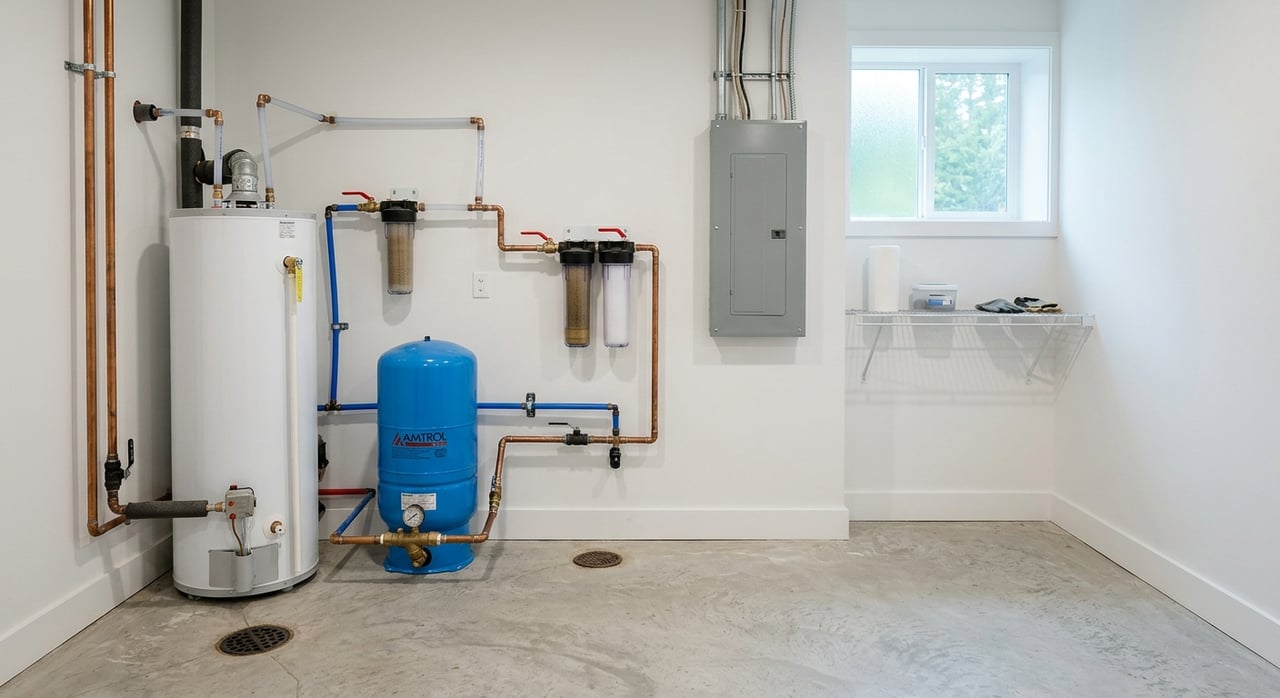
If you’re buying or selling in Powhatan County, one of the biggest questions is not always the house itself. It’s what powers the day-to-day basics: water, sewer, electric, and whether the property depends on a private well or septic system. That can feel like a lot to sort through, especially if you’re comparing homes, acreage, or buildable land. In this guide, you’ll get a clear look at how wells, septic, and utilities work in Powhatan County so you can plan ahead and avoid surprises. Let’s dive in.
Powhatan utilities are not one-size-fits-all
Powhatan County has a mixed utility setup, which means some properties have access to public water or sewer and others do not. According to the county, potable water and sanitary sewer are available from the Chesterfield County line along the Route 60 corridor to Flat Rock, while sanitary sewer is also available in the courthouse area and portions of Route 60.
Aqua Virginia also serves parts of Powhatan County, including the Courthouse area and portions of the Route 60 corridor. Electric service in the county is provided by Dominion Power and Southside Electric. Because service areas vary, you should confirm utility details for the specific parcel rather than assuming based on a mailing address or subdivision name.
Public water and sewer in Powhatan
If a home is in one of Powhatan’s limited public-service areas, that can change both your upfront costs and your long-term budgeting. County utility bills are generally paid directly to the Powhatan County Treasurer, except for Aqua Virginia customers.
Powhatan’s current rate sheet, effective July 1, 2025, lists these standard fees for a 5/8-inch meter:
- $25 service application fee
- $65 fee to set a water meter
- $100 water service deposit
- $100 wastewater service deposit
- $5,811 standard water connection fee
- $8,642 standard wastewater connection fee
Residential water and wastewater usage is billed at $8 per 1,000 gallons on a bi-monthly basis, with added capacity charges tied to meter size. If you are buying land near an existing service area, those figures are worth reviewing early because public hookup costs can materially affect your budget.
Private wells in Powhatan County
Many Powhatan properties rely on private wells, especially outside the more developed utility corridors. For those homes, the well is typically the owner’s responsibility.
The Virginia Department of Health does not test private wells on a routine basis for property transfers, and it does not require routine private-well testing just because a home is being sold. Still, VDH notes that newly constructed wells require disinfection and bacteriological testing when installed, and it suggests that buyers test for basic indicators, bacteriological concerns, and radiological chemicals of concern.
Once you establish a baseline, VDH recommends annual testing for bacteria and nitrate. That matters for both buyers and sellers because lenders may request testing even when state guidance does not require it for the transfer itself.
What to ask about a private well
When you are evaluating a home or land purchase, ask for as much documentation as possible. A well can look fine from the surface, but the records often tell a fuller story.
Useful items to request include:
- Well location
- Well construction information
- Age of the well
- Age of the pump
- Age of piping, if known
- Recent water-test results
- Any available well log or related records
For raw land, timing matters. Virginia law says a private well may not be placed into operation without a written inspection statement, and the construction permit is valid for 18 months. If you are planning to build, it is smart to think through well planning long before the last minute.
Septic systems in Powhatan County
Septic is just as important as water, and in many parts of Powhatan it is part of everyday rural homeownership. If a property is not connected to public sewer, understanding the type, condition, and maintenance history of the septic system is a big part of due diligence.
For conventional septic systems, VDH says tanks should generally be pumped and inspected every three to five years. For alternative onsite sewage systems, owners are responsible for annual inspections by a licensed operator, along with routine pumping and service recordkeeping.
Some properties may also be subject to stricter local or HOA rules in sensitive areas. That is why it helps to verify the requirements tied to the specific property instead of relying on general assumptions.
What to ask about a septic system
If you are buying an existing home, ask clear questions early. Septic details often affect inspection timing, negotiation, and lender comfort.
Request information such as:
- Septic system location
- System age
- Original permits, if available
- Pump-out history
- Maintenance records
- Any service contracts or operator reports
These records can help you understand whether the system has been maintained consistently or whether further evaluation may be needed.
Buying land in Powhatan? Start utility work early
If you are buying vacant land or planning new construction, wells and septic are not details to figure out later. They are part of the property’s buildability and development timeline.
Powhatan County’s own application materials advise applicants to request a certification letter first to determine whether land is suitable for a sewage system. The county also says you should apply for a construction permit only when you are ready to build.
Powhatan’s residential permit checklist requires a copy of the well and septic permit issued by the Virginia Health Department unless the property is served by public water and sewer. In practical terms, that means utility and soil planning should happen early, especially for land buyers who want a smoother path to building.
FHA and VA loans can add extra steps
If you are using FHA or VA financing, water and sewer conditions can affect the transaction timeline. Both loan programs treat safe water supply and sanitary sewage disposal as minimum property requirements.
For certain well situations, FHA requires water testing by a disinterested third party. FHA specifically identifies possible triggers such as new construction, reported deficiencies, unsafe water, proximity to hazardous sites, or a well within 100 feet of a septic system. FHA also lists minimum separation guidance of 50 feet from a septic tank and 100 feet from a drain field for existing construction.
VA also treats water and sewer as minimum property requirements and notes that an appraisal is not a substitute for a private inspection. VA further states that water-quality results are valid for 90 days from the date certified by the local health authority, unless the local authority says otherwise.
Another key point for Powhatan buyers is this: if public water is available and the local authority requires connection, VA says the property must be connected. That is one more reason to confirm utility availability and local requirements early in the process.
What wells and septic can cost
Costs vary by property, but a few published numbers help frame the conversation. Powhatan’s environmental health fee schedule lists:
- $300 for a private-well-only application
- $425 for an onsite sewage-system construction permit when there is no OSE/PE documentation
- $100 for a safe, adequate, and proper evaluation with documentation
For ongoing ownership, maintenance costs matter too. Consumer-market estimates in the research report put professional well inspections around $300 to $600, septic tank pumping around $291 to $561, and well drilling around $3,000 to $9,000, or roughly $25 to $65 per foot.
Virginia Tech also notes that water-testing kits through the Virginia Household Water Quality Program are available for $70, while private commercial lab testing commonly costs more than $300. It also points out that drilled well pricing usually does not include the pump, plumbing, or electrical work, which are separate costs.
The main takeaway is simple: whether a property uses private systems or public hookups can meaningfully change both your upfront purchase budget and your long-term ownership costs.
A practical Powhatan checklist
Before you move too far into a purchase or sale, it helps to gather the right information in one place. That can make the property feel much more straightforward for buyers, lenders, and inspectors.
Use this checklist as a starting point:
- Confirm the exact water source for the parcel
- Confirm the sewer or septic setup for the parcel
- Confirm the electric provider
- Collect well records and recent water-test results
- Gather pump age and related well details
- Request septic permits and maintenance history
- Ask for any septic service contracts or operator reports
- Order lender-appropriate inspections early for FHA or VA loans
- For raw land, begin the VDH certification-letter or related septic process early
- Before digging, trenching, fencing, or utility work, contact Virginia 811 to have underground lines marked
Why this matters when buying or selling
In Powhatan County, utility details are not just background information. They can affect financing, inspections, permit timing, buyer confidence, and total cost.
For buyers, understanding wells, septic, and utility access helps you compare properties more accurately. For sellers, having records ready can reduce uncertainty and make your property easier to evaluate.
This is especially true in a market like Powhatan, where homes, acreage, and buildable lots often come with property-specific utility questions. The more clearly those details are documented, the smoother the transaction usually feels.
If you’re buying or selling a home, land, or acreage in Powhatan County, working with someone who understands these local moving parts can save you time and stress. For straightforward, local guidance on rural and exurban property decisions, reach out to Joey Wray.
FAQs
What utilities are available in Powhatan County real estate?
- Powhatan County has a mixed utility landscape. Some properties have access to public water and sewer, especially along parts of Route 60 and in the courthouse area, while many others rely on private wells and septic systems.
What should buyers ask about a Powhatan County private well?
- You should ask for the well location, construction details, age of the well, age of the pump and piping if known, and any recent water-test results or well records.
How often should a septic system be pumped in Powhatan County?
- For a conventional septic system, VDH says the tank should generally be pumped and inspected every three to five years. Alternative systems have additional annual inspection requirements.
What should land buyers know about septic permits in Powhatan County?
- Powhatan County advises land buyers to request a certification letter first to determine whether the land is suitable for a sewage system, then apply for a construction permit when they are ready to build.
Do FHA and VA loans require well or septic checks in Powhatan County?
- They can. FHA and VA both require adequate water and sewage disposal, and certain well situations may require testing or additional review depending on the property and loan guidelines.
How do utility costs affect buying in Powhatan County?
- Utility setup can significantly change your budget. Public hookup fees, private well applications, septic permits, water testing, pumping, and possible drilling costs all add to the total cost of owning or developing a property.