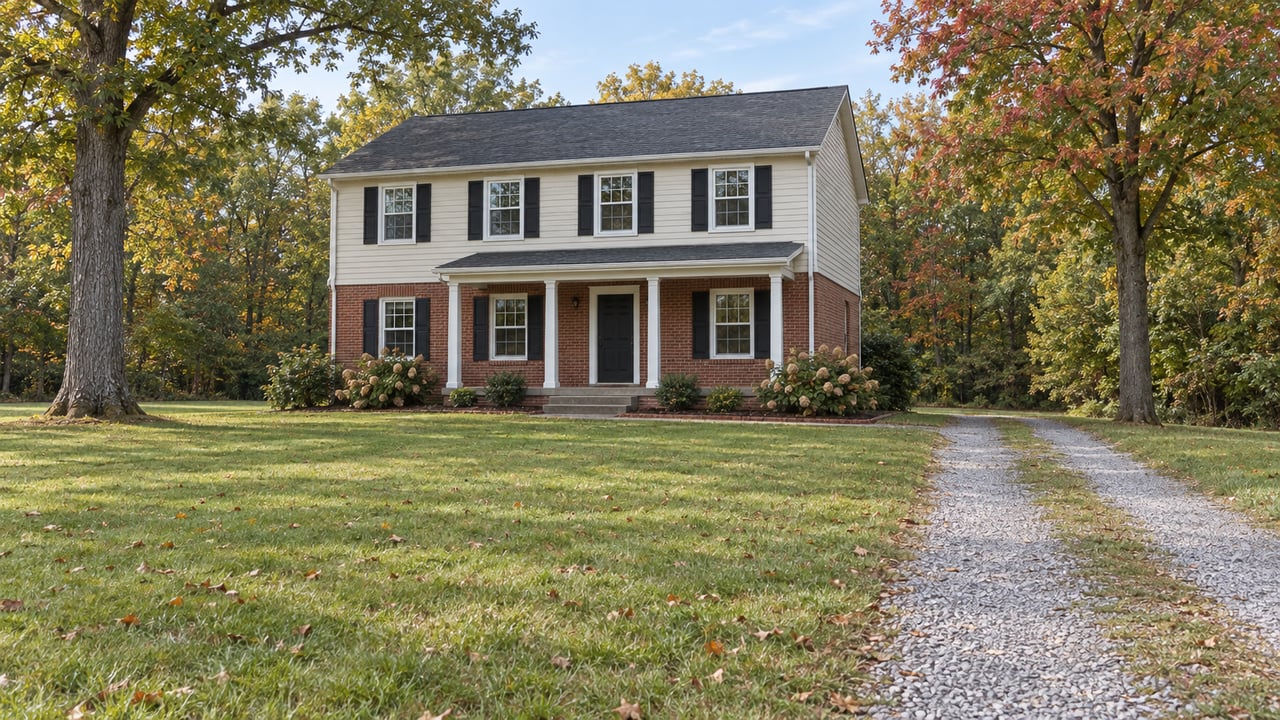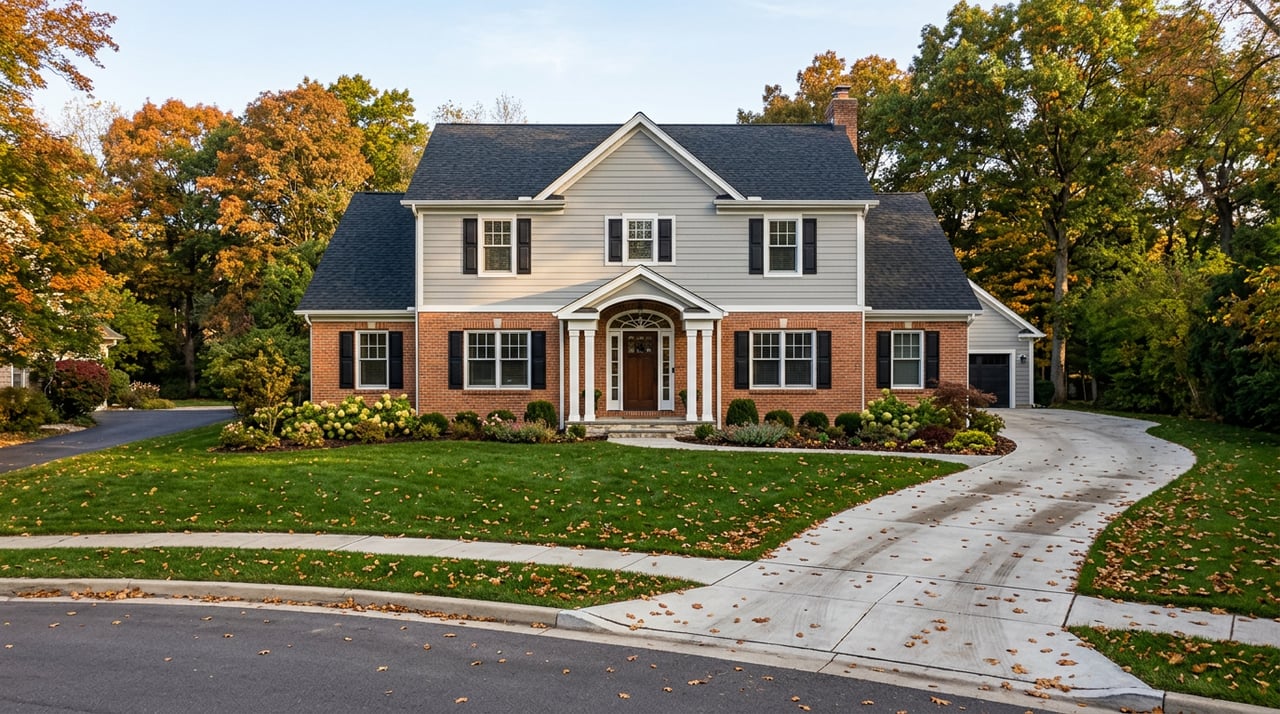
At a Powhatan County Planning Commission workshop on January 14, 2026, Commissioner Bobby Hall said something that should stop any land buyer mid-scroll. Talking about the county's standard ten-acre parcels, he told his fellow commissioners that prices had climbed from roughly $100,000 historically, to $200,000 to $250,000, and more recently to $300,000 to $350,000.
That is not appreciation. That is a different market wearing the same zip code.
If you are shopping for acreage in Powhatan and comparing it to Cumberland, Chesterfield, or Hanover, the instinct is to assume this is a popularity story. More buyers want rural land near Richmond, so land costs more. It is a clean explanation, and it is mostly wrong. The commissioners on that call were not describing a surge in demand. They were describing what happens when a county draws a line on a map and never redraws it fast enough to keep pace with what people want to build behind it.
The Line That Does Most of the Work
Powhatan is a big county on paper, roughly 262 square miles by most county-level accounting. But when commissioners talk about where new subdivisions, cluster housing, or denser residential can actually go, they are not talking about the whole county. They are talking about designated growth areas, and at a February 25, 2026 workshop, Commissioner Jessica Winall pointed out that those growth areas cover only about 3 percent of Powhatan's roughly 272-square-mile area.
Outside that sliver, land is zoned agricultural or rural conservation, which is exactly the character most buyers say they want when they come looking for acreage. The problem is that same zoning makes it slow and expensive to turn raw land into a buildable homesite, because you are working without the water and sewer lines that make subdivision easy. So the 97 percent of the county that reads as "available" on a map is, in practice, a much smaller pool of land that can be split, permitted, and built on without a fight.
Why Water Is the Actual Ceiling
This is the part that does not show up on a real estate portal. County staff have been working from a 2025 utility master plan prepared by Dewberry, and the takeaway is blunt: supporting any real amount of new development in the county's east growth area will require a regional pump station south of U.S. Route 60 and added capacity at the Duetourt treatment plant. Neither of those exists yet.
Layer in one more detail from that same February 25 workshop: a planned data center in the county is already projected to draw on that same limited water and wastewater capacity. Housing and industrial growth are now lining up for the same pipe. When commissioners talk about "where to add housing," they are really asking where the county's plumbing can support it, and the honest answer right now is not many places.
That is the mechanism behind Hall's numbers. It is not that everyone wants a ten-acre lot in Powhatan. It is that the number of ten-acre lots the county can actually service with water, sewer, and paved access is shrinking relative to demand, and price is how that scarcity shows up.
The Ten-Lot Rule Nobody Outside the County Has Heard Of
Powhatan's subdivision ordinance allows up to ten lots to be created off a private road without triggering the stricter paved-road standards that apply to larger developments. At that same January 14 meeting, Commissioner Darlene Bowlin defended keeping that threshold exactly where it is, arguing it already satisfies state requirements and that forcing paved roads on smaller subdivisions would only push land prices higher and work against the rural character she wants to preserve.
Commissioner Kenneth Hatcher II saw it differently, arguing there is real demand for smaller parcels and that a lot of buyers simply want "small houses on one acre" rather than sprawling ten-acre estates. Neither commissioner is wrong. They are describing two different segments of the same buyer pool, and the county has not yet decided which one its ordinance is supposed to serve.
That disagreement matters if you are shopping right now, because it means the rules are not settled. A handful of proposals are actually on the table for this year's comprehensive plan update:
- A Unified Development District that would consolidate several existing zoning tools into one flexible master-plan category
- A modest increase to accessory dwelling unit size limits
- Cluster housing, smaller homes built around shared open space, allowed in designated growth areas
- A conservation subdivision density bonus that could rise from the current 20 percent by right to as much as 85 percent under a conditional use permit
- Tighter limits on private-road subdivisions of the kind Bowlin was defending
None of these have been adopted. But any one of them would change what a given parcel of Powhatan land is actually worth to build on, which is a different question than what it costs to buy today.
What This Looks Like Once You're on the Ground
The abstractions get concrete fast once you look at what is actually for sale. A 9.6-acre parcel on Barley Farms Lane is currently listed at $325,000, which lands almost exactly in the middle of the range Hall described for ten-acre lots. That is not a coincidence. That is the market doing what the commissioners said it would do.
Contrast that with Beaumont on the James, a small riverfront subdivision in Maidens where the available ten-acre lots include something the listing itself flags as unusual: public water hookup. In most of rural Powhatan, buyers are pricing in a private well and a septic system as a matter of course, because public water simply does not reach that far. When a listing calls out public water as a selling point, that is the infrastructure scarcity showing up in the marketing copy.
Then there is Holly Hills, an older, smaller-lot neighborhood that commissioners have started citing as a model for exactly the kind of denser, more attainable housing the county says it wants more of. It already sits near existing water and sewer lines and existing businesses, which is precisely why commissioners keep bringing it up. It was built before the current growth-area math made that kind of infrastructure-adjacent development this hard to replicate.
At the other end of the spectrum, Greywalls, the gated community built around The Foundry Golf Course, is releasing its final section this year, homesites between 2 and 6 acres. Estate-scale lots at the golf course keep moving even as the county debates how to create 250 workforce housing units over the next five years, a goal the county's own Housing Affordability Study Committee set as part of the comprehensive plan process. Two very different products, built on two very different assumptions about what land near Powhatan's limited infrastructure is worth.
What It Means If You're Comparing Counties
If you are cross-shopping Powhatan against Cumberland or Chesterfield using a simple price-per-acre number, you are missing the variable that actually explains Powhatan's trend line. This is not a county getting broadly more expensive because Richmond's exurbs are hot. It is a county where a specific, narrow supply of infrastructure-ready acreage is being rationed by a growth-area boundary that covers 3 percent of the map, a water and sewer system that has not caught up to demand, and a subdivision ordinance that two sitting commissioners cannot agree on.
That has a practical consequence for anyone about to make an offer. A ten-acre parcel inside or near the growth area, with existing water or a clear path to it, is going to price like the parcels Hall described. A similar-sized parcel further out, dependent on a well, a septic permit, and a private road, is playing by different rules entirely, and its price should reflect that. The county's own map is the first thing worth checking, before the comps.
It is also worth watching the calendar. The comprehensive plan update working through workshops this year could change the ten-lot standard, the conservation subdivision bonus, or where growth-area boundaries sit. Any of those changes would shift what a given parcel is worth to build on almost overnight. Land bought today under the current rules is a bet on how long those rules hold.
If you are looking at acreage in Powhatan, Cumberland, or anywhere else in this corner of the Richmond exurbs and want someone who tracks these county-level shifts as closely as the comps, Wray Realty Group can walk through what a specific parcel's zoning and utility access actually mean before you write an offer. Let's Connect.