Buying land in Cumberland County can be a smart move if you want space, privacy, or a spot to build a custom home or hobby farm. But rural acreage comes with its own rules and hidden hurdles. From zoning and septic to access and broadband, a little homework upfront can save you time, money, and stress later.
This guide walks you through what matters most before you write an offer. You will learn how to verify buildability, protect your rights of way, confirm utilities and internet options, and evaluate timber or tax benefits. Let’s dive in.
Start with zoning and land use
Before you assume you can build, split, or farm, confirm the parcel’s zoning and any overlays that apply. Cumberland County’s Planning and Zoning Department maintains the official zoning map and is your first stop for permitted uses, minimum lot sizes, and development requirements. Start by reviewing the county’s zoning map and resources.
Confirm district and permitted uses
Ask the Planning and Zoning office to confirm the zoning district, what uses are allowed by right, and which ones require a special permit. If you plan to subdivide, verify the rules and process for your specific district. Request any relevant fee schedules and timelines in writing so you can plan your budget and contract contingencies. You can find staff contacts and process information on the county’s Planning and Zoning page.
Check floodplains and special overlays
Cumberland County participates in the National Flood Insurance Program, and certain flood zones affect buildability and insurance. Use the county zoning resources to see if your parcel overlaps a floodplain. For parcel-level confirmation, check the FEMA Map Service Center’s official flood map tools. If a portion of the land lies in a Special Flood Hazard Area, you may face elevation requirements and higher insurance costs.
Prove septic and well feasibility
In much of rural Cumberland, homes rely on private septic systems and wells. That means soil and site conditions can make or break your plans. Virginia’s Department of Health (VDH) regulates onsite sewage and private wells and outlines the process for evaluations and permits. Review VDH’s guidance on onsite sewage and private wells.
How septic permitting works in Virginia
Virginia accepts private site evaluations and designs from licensed professionals known as AOSEs or professional engineers. The state’s regulations, known as 12VAC5-610, explain how site suitability is determined and when percolation tests may be used as part of the evaluation. You can read the regulatory framework in the Virginia Administrative Code. After review, VDH may issue a Certification Letter or a Construction Permit that you can rely on for building.
Order a site evaluation early
If the seller cannot produce a current Certification Letter or permit, plan to hire an AOSE to perform a site and soil evaluation during your contract period. This evaluation identifies a suitable location and type of system, such as a conventional drainfield or an alternative system. Ask the evaluator to map potential house and driveway sites so you can avoid conflicts with setbacks and easements.
Use desktop tools to screen soils
Before you spend on fieldwork, run a quick desktop check using the USDA NRCS Web Soil Survey. It can help you identify steep slopes, hydrologic groups, or drainage issues that may complicate a system. Treat this as a first pass only. Final approval depends on on-the-ground borings and professional evaluation.
Make septic and well a contract contingency
Protect yourself in writing. Include a contingency that allows time for an AOSE evaluation, issuance of a VDH Certification Letter or conditional permit, and any necessary well testing. Request that any VDH records or AOSE designs transfer to you at closing. VDH’s onsite sewage and well guidance outlines documentation types you can rely on.
Verify road access and entrances
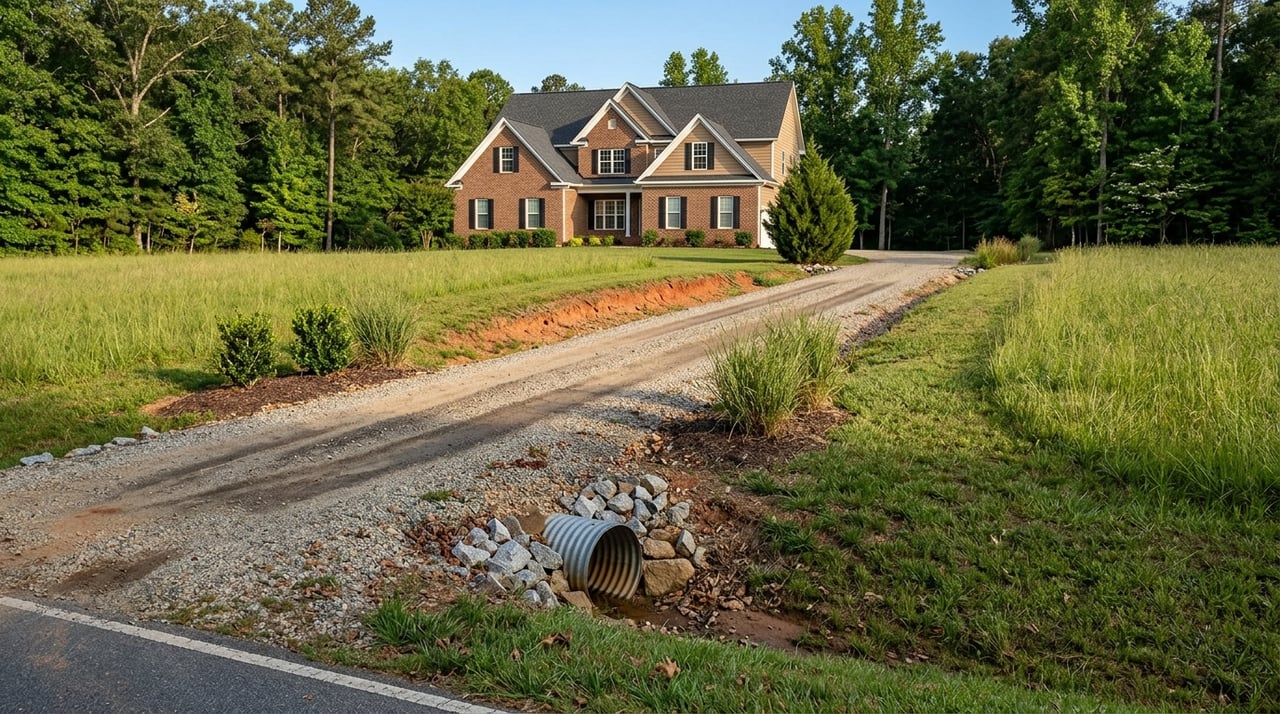
Physical frontage on a road does not always mean legal, buildable access. In Virginia, the location and design of a driveway entrance are controlled by VDOT for state-maintained roads. If the access is across a private road, you need a properly recorded easement and a maintenance agreement.
Public vs. private road rules
If your parcel fronts a state-maintained road, you typically must secure a VDOT entrance permit before building a driveway. The rules cover where an entrance can go, its width, sight distance, and how shared driveways work. Review the VDOT administrative rules on entrance permits in the Virginia Register.
If access relies on a private road or a shared driveway across another parcel, confirm a recorded easement and a maintenance agreement. Lenders often require these for financing, and they protect you from future disputes.
What to document before closing
- A written statement or permit from VDOT indicating an entrance location is acceptable for your intended use.
- Copies of any recorded access easements, rights of way, and shared-entrance agreements.
- A current survey that shows the entrance location in relation to property lines, utilities, and setbacks.
Check utilities and broadband
Rural parcels in Cumberland have expanding options, but availability varies by address. Confirm serviceability in writing before you remove contingencies.
Electric service letters and costs
Ask the local electric utility to confirm whether service is available to the parcel and whether any line extension fees apply. Request an estimate and a timeline in writing. This helps you budget and prevents delays once you start site work.
Fiber and internet availability
Central Virginia Electric Cooperative’s Firefly Fiber Broadband is actively building out service in Cumberland County. Coverage is rolling out by neighborhood, so you must check exact addresses for service timelines. Use Firefly’s Cumberland partner page to verify address-level options and timing at the Firefly project resource. Where fiber is not yet available, you may need to rely on cellular or satellite until buildouts reach your area.
Water and sewer availability
Much of the county relies on private wells and septic systems. In limited corridors, public or community systems may exist. During your diligence period, ask the county and any local service authorities to confirm whether public water or sewer lines reach your parcel and whether connection is allowed for your intended use.
Evaluate timber and tax programs
Some acreage in Cumberland includes marketable timber. Proper evaluation and planning can protect your property and increase value.
Timber inventory and sale basics
If the land has merchantable timber, hire a consulting forester to inventory species, size, and volume. Ask for boundary marking, recommended harvest methods, and a projected value range. The Virginia Cooperative Extension outlines best practices for contracts, using qualified loggers, and protecting water quality in its step-by-step timber sale guide. Always get a written timber-sale contract that spells out prices, payment terms, performance standards, and site restoration.
Land-use assessment and rollbacks
Virginia counties often offer land-use assessment that can lower annual taxes for qualifying agricultural, forest, horticultural, or open-space land. If the parcel is in the program, confirm current enrollment and rules with the Cumberland County Commissioner of the Revenue. Ask about potential rollback taxes if you change the use or subdivide so you can plan for those costs.
Your Cumberland due-diligence checklist
Use this list to keep your purchase process on track. Work through it during your contract period and tie key items to contingencies.
- Zoning and uses: Confirm district, permitted and special uses, minimum lot size, and any overlays using the county’s zoning resources. Document any staff guidance in writing via the Planning and Zoning office.
- Floodplain status: Check whether any portion of the parcel lies in a FEMA Special Flood Hazard Area using the FEMA map tools. Note any elevation or insurance implications.
- Survey and boundaries: Order a current boundary survey, or verify that a recent, sealed survey exists. Confirm acreage, corners, and potential encroachments.
- Access and entrance: For state roads, secure a written VDOT entrance approval or permit based on the entrance-permit rules. For private roads, verify recorded easements and maintenance agreements.
- Septic feasibility: Hire an AOSE to perform borings and a site evaluation. Seek a VDH Certification Letter or a conditional Construction Permit per VDH guidance and the state regulations.
- Well and water testing: Plan a private well yield test and lab testing for bacteria and basic chemistry. Confirm well location on the survey to protect setbacks.
- Soil screening: Run a desktop check with the Web Soil Survey to understand slopes, drainage, and potential constraints.
- Utilities and broadband: Request written electric serviceability and any line-extension estimates. Confirm fiber or internet availability by exact address through the Firefly project resource.
- Timber and resource rights: If timber appears valuable, commission a forester inventory and use the Extension’s timber sale guide to structure contracts. Ask for copies of any existing leases or resource agreements.
- Title review: Have your title company pull all easements, covenants, rights of way, and any mineral or timber reservations. Ensure they match what you see on the survey.
Common pitfalls to avoid
- Assuming frontage equals access. Without a VDOT entrance permit or recorded easement, your driveway plan may not be legal or safe.
- Skipping the AOSE evaluation. Desktop maps do not replace field borings and a formal VDH Certification Letter or permit.
- Overlooking flood overlays. Even partial floodplain areas can affect where you can build and what insurance costs.
- Ignoring broadband reality. Fiber availability changes by the street. Confirm exact address coverage and timing before you close.
- Forgetting rollback tax risk. If you change the use or subdivide land that is in a land-use tax program, you could owe rollbacks.
Work with a local land specialist
Buying acreage in Cumberland County rewards careful planning. When you confirm zoning, septic, access, utilities, and timber value up front, you can write a stronger offer and move forward with confidence. If you want a clear plan and reliable contacts for AOSEs, surveyors, title, and foresters, partner with a local agent who handles rural land every week.
If you are ready to find the right parcel or you want a second set of eyes on a property you found, reach out to Joey Wray for straight talk and a calm, step-by-step process.
FAQs
What is the first step to confirm if I can build on land in Cumberland County?
- Start with the county’s zoning map and resources, then speak with Planning and Zoning to verify permitted uses, minimum lot size, and any overlays that affect your plans.
How do I know if the land will perc for a septic system?
- Hire a licensed AOSE to perform soil borings and a site evaluation, then obtain a VDH Certification Letter or Construction Permit following VDH guidance.
Do I need a permit for a new driveway in Cumberland County?
- If your driveway connects to a state-maintained road, you will need a VDOT entrance permit; review the entrance-permit rules and confirm approval in writing before closing.
How can I check flood risk on a rural parcel?
- Use the FEMA Map Service Center’s flood map tools to see if any portion of the property lies in a Special Flood Hazard Area, which can affect building design and insurance.
Is fiber internet available in Cumberland County right now?
- Firefly Fiber Broadband is actively building service in Cumberland; availability varies by neighborhood, so confirm by exact street address using the Firefly project resource.